Split Transmittance Meter About
As an Authorized dealer we are engaged in providing the broad assortment optical instruments.
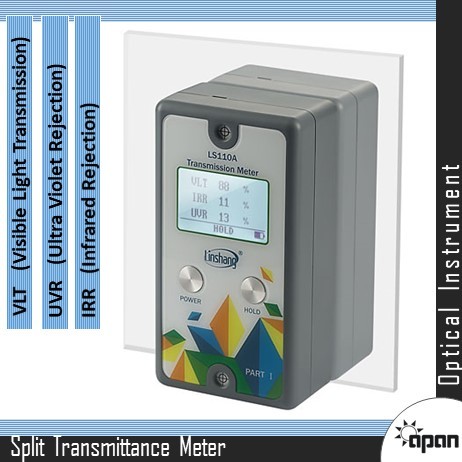
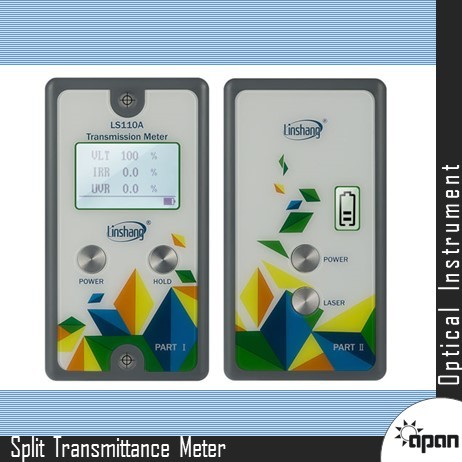
Split transmission meter has three independent testing units to measure the transmittance value of ultraviolet light, infrared light, and visible light. It is used for the transmittance testing of glass, plated film, organic materials, solar film and other translucent materials such as insulating glass, filmed glass, PMMA materials etc.
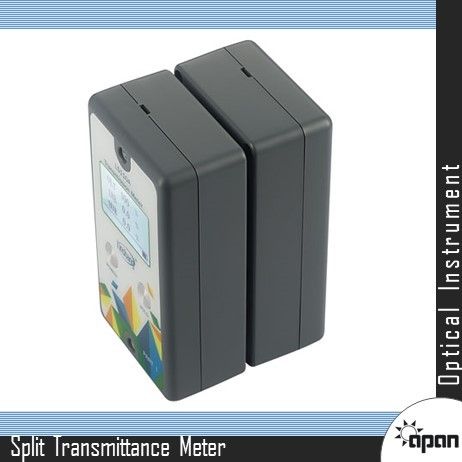
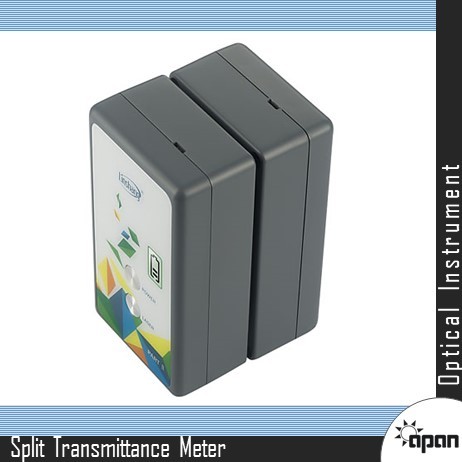
It consist of two parts: main part for measuring and displaying functions and the auxiliary part for light source and laser light for alignment.
Features :
- Two-parts dual mode of the main and auxiliary part facilitates the transmittance measurement of the automobile front windshield glass and building glass.
- The built-in lithium rechargeable battery is easy for use without replacing the battery;
- Use the USB port of computer to charge the meter via the built-in charger;
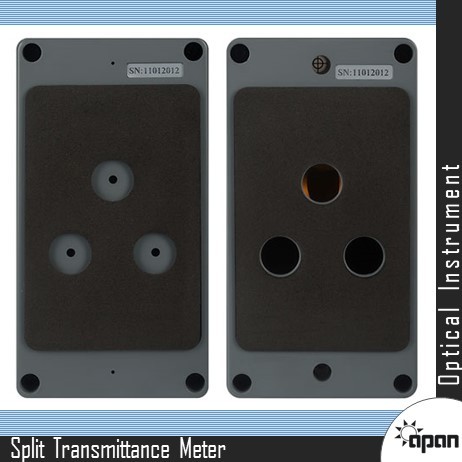
- The laser alignment function guarantees the accurate alignment of the main part with the auxiliary part in the process of measurement and ensures accurate measurement.
- Three light Transmittance Meter in one device; result is the average of three values
- Two laser for two part alignment, more accuracy.
Specifications :
- VL Peak wavelength: 550nm
- UV Peak wavelength: 365nm
- IR Peak wavelength: 950nm
- Test sample size: > 40 x 40mm
- Accuracy: better than +/-2% (Colorless and transparent material)
- Resolution: 0.1% for measured value<10% and 1% for other ranges
- Power supply: built-in lithium rechargeable battery
- Dimension: 140mm x 82mm x 92mm (length x width x height)
- Weight: 680g
With its ability to measure transmittance from 200nm to 2500nm, the Split Transmittance Meter accommodates UV, visible, and IR spectra. This expansive range enables precise evaluations of optical materials used in diverse industries, from architectural glass to advanced films, ensuring thorough assessment of light transmission capabilities.
Automatic Calibration and High AccuracyAutomatic calibration with every use eliminates complex setup and ensures consistently reliable readings. The microprocessor-controlled system delivers measurements with an 2% accuracy, supported by stable integrated light sources. Fast response time (<1s) and digital LCD display allow users to receive real-time, high-fidelity data instantly.
Flexible Sample Accommodation and User-Friendly DesignStandard and customizable options for specimen thickness (up to 120 mm) and adaptable specimen sizes make this meter suitable for a wide variety of samples. Its portable, split-type structure, coupled with a protective casing, enables effortless use and safeguarding of sensitive inner components in laboratory or field settings.
FAQs of Split Transmittance Meter:
Q: How does the Split Transmittance Meter measure light transmittance across UV, visible, and IR ranges?
A: The meter uses a direct optical beam-splitting technique, enabling parallel light path measurement with a high-sensitivity photodiode array. It covers 200nm-2500nm, ensuring accurate transmittance data for UV, visible, and IR spectra in glass or films.
Q: What calibration process does the meter follow for accurate readings?
A: The device features automatic calibration upon startup, using its integrated reference channels. This process minimizes drift, maintains high stability, and ensures reliable measurements without manual intervention.
Q: When should I use this meter for optical material evaluation?
A: The Split Transmittance Meter is ideal for applications requiring precise assessment of optical transparency, such as glass quality control, film inspection, and R&D in photonics. Use it when comprehensive spectral analysis and high accuracy are essential.
Q: Where is the best location to operate the Split Transmittance Meter?
A: It should be operated indoors in a dust-free, vibration-free environment. This setting protects the sensitive optics and electronics, ensuring consistent and reliable performance.
Q: What is the process for measuring a sample using this equipment?
A: Place your specimen onto the holder, ensuring correct alignment. Adjust the test speed and stroke, then initiate measurement through the digital interface. The meters microprocessor automatically splits the beam and records transmittance values in real time.
Q: How can I connect and retrieve data from the meter?
A: Data output is easily accessible via digital LCD display or through USB/RS232 interfaces. Connect to compatible devices for storage, analysis, or integration into laboratory management systems.
Q: What are the main benefits of using this Split Transmittance Meter?
A: Its key advantages include broad wavelength coverage, automatic calibration, real-time digital output, high accuracy, flexible sample handling, portability, and robust protection, making it a reliable tool for fast and precise transmittance measurements.

 Send Inquiry



 Send Inquiry

 Send Inquiry


