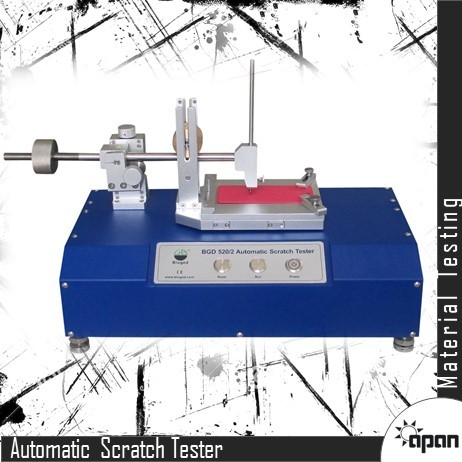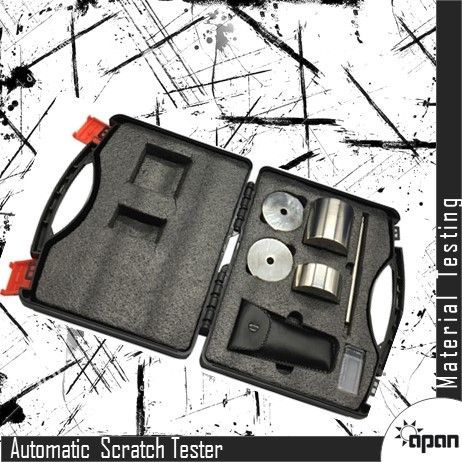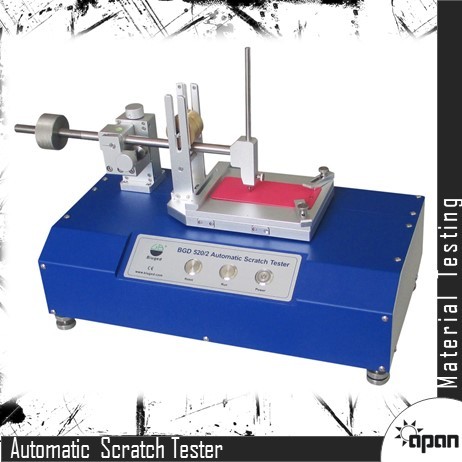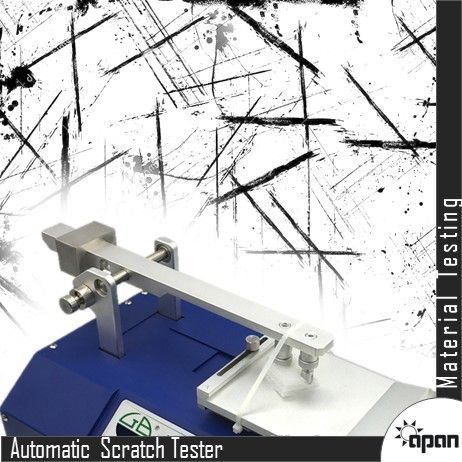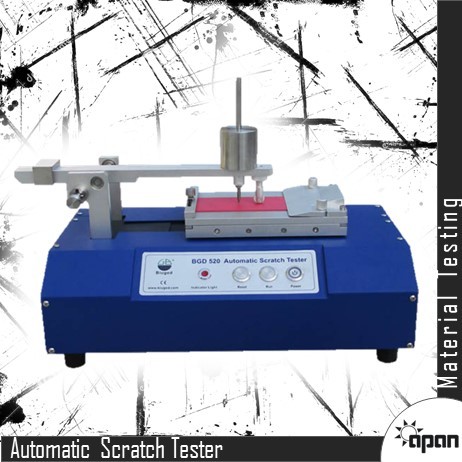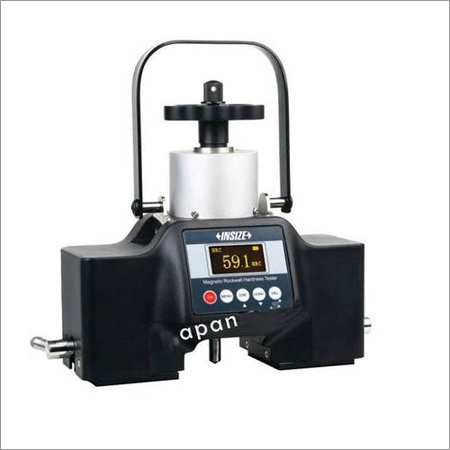
Automatic Scratch Tester

Automatic Scratch Tester

Automatic Scratch Tester Specification

  • Number of Specimens
  • 1
  • Specimen Size
  • 100 50 mm (max)
  • Application
  • Scratch Resistance Testing for Coatings, Paints, Platings, Sheets
  • Test Range
  • 1N 50N
  • Interface Type
  • RS232, USB
  • Humidity
  • 30-80% RH
  • Display Type
  • Digital LCD
  • Frequency
  • 50 Hz
  • Response Time
  • <1 sec
  • Operating Voltage
  • 220V
  • Accuracy
  • 1%
  • Resolution
  • 0.01 N
  • Temperature
  • 15-35C
  • Max Height
  • 60 mm (Specimen thickness)
  • Mounting Type
  • Table Top
  • Measuring Range
  • 1N 50N (Scratch Load)
  • Power Supply
  • 220V AC, 50Hz
  • Port Size
  • Standard 6 mm
  • Gas Pressure
  • 0.4~0.7 MPa
  • Automation Grade
  • Automatic
  • Features
  • Microprocessor based, Programmable load, Adjustable speed, Audible warning
  • Hardness
  • Supports pencil & diamond stylus
  • Equipment Type
  • Automatic Scratch Tester
  • Usage
  • Laboratory Testing
  • Capacity
  • Up to 100 tests/hour
  • Machine Weight
  • Approx. 30 kg
  • Test Speed
  • 10-200 mm/min (adjustable)
  • Test Width
  • 70 mm (max)
  • Test Stroke
  • 70 mm (adjustable)
  • Control Mode
  • Automatic & Manual


About Automatic Scratch Tester

As an authorized dealer we are engaged in providing the broad assortment of Material Testing Equipment for various applicants.

Depending on the requirements, there are various methods for testing hardness. Some are dedicated to characterise coatings and others are more suitable for testing bulk materials such as metals, plastics, rubber or elastomers.

Scratch Resistance: To assess a coatings resistance to scratch there are a number of different instruments that can be used: Pencil Hardness Tester (Wolff-Wilborn), Sclerometer, Clemen Apparatus, Scratching and Shearing /Scratch Instrument.

Coatings and paints can protect, decorate substrate or conceal the defects of substrate, and these three functions are related with coatings hardness. And hardness is the important performance for paint mechanical strength, as well as the important indicator to judge paint quality. One of important indicators to evaluate coatings hardness is scratch resistance.

ISO 1518  Paints and varnishes -- Determination of scratch resistance specifies a test method for determining under defined conditions the resistance of a single coating or a multi-coat system of paint, varnish or related product to penetration by scratching with a scratch stylus loaded witha specified load. Penetration of the stylus is to the substrate, except in the case of a multi-coat system, in which case the stylus can penetrate either to the substrate or to an inter mediate coat.

Automatic scratch test principle is to put a single or composite metal test plate fixed on the instrument work platform, when testing, working plat pull test plate at a rate of 30 to 40 mm/s to move slowly, at the same time, loading a load of hemispherical scriber slowly move reverse lines in the coating surface, if the scriber cuts coating, the scriber and test plate will show conductive between plates. The results are evaluated at a certain load whether the needle cuts through coating or a needle does not cut through of maximum load.

This test has been found to be useful in comparing the scratch resistance of different coatings. It is most useful in providing relative ratings for a series of coated panels exhibiting significant differences in scratch resistance. 

  •  Big working table can be moved left and right convenient for measuring different areas in the same panel
  •  Special fixing device for sample---can test different size substrate
  •  Sound-light Alarm system for puncturing through sample panel---more visual
  •  High hardness material stylus--more durable

 Specification 


Advance Model

Basic Model

Conform standards

ISO 1518-1

BS 3900E2

ISO 1518-2

Stylus

Having a hemispherical hard-metal tip of radius 0.25mm or 0.5mm

Having a hemispherical synthetic-ruby of radius 0.25mm or 0.5mm

Coned sapphire or diamond, the tip radius is 0.03mm

Angle between stylus and sample

90

90

Weight

Constant-loading (0.5N1pc1N1pc2N2pcs5N1pc10N1pc

Variable-loading0g50g or 0g100g or 0g200g

Motor

60W 220V 50HZ


Sytlus Moving Speed

 (355mm/s

102mm/s

Working Distance

120mm

100mm

Max. Panel Size

200mm100mm


Max. Panle Thickness

Less than 1mm

Less than 12mm

Overall Size

500260380mm

500260340mm

Net Weight

17 KG

17.5KG


Advanced Scratch Testing for Diverse Materials

This automatic scratch tester is engineered for rigorous evaluation of coatings, paints, and platings, ensuring optimal scratch resistance. With its adjustable parameters and programmable loads, the system offers remarkable versatility for laboratory environments. Its microprocessor-based design allows consistent, repeatable testing, adhering to major international standards.


User-Friendly Operation and Precise Reporting

Featuring a digital LCD and both automatic and manual control modes, the tester provides intuitive use and straightforward navigation. Printable and savable reports enhance record-keeping and analysis, while the systems fast response time and reliable accuracy ensure all test results are delivered precisely.


Intelligent Safety Measures and Robust Design

Safety is prioritized with overload protection and an emergency stop feature. Housed in a sturdy table-top frame, the tester is suitable for busy laboratory settings. Its moderate size and weight make it accessible for a variety of laboratory setups, balancing portability with stability.

FAQs of Automatic Scratch Tester:


Q: How do I operate the Automatic Scratch Tester, and what control modes are available?

A: You can operate the tester using either the automatic or manual control modes, accessible via the digital LCD interface. Automatic mode allows for pre-programmed settings, while manual mode provides fine-tuned, on-demand adjustments during testing.

Q: What materials and specimen sizes can this scratch tester handle?

A: The tester is suitable for coatings, paints, platings, and sheets, accommodating specimens up to 100 50 mm with a maximum thickness of 60 mm. Supported stylus types include diamond and tungsten carbide, and pencil hardness can also be evaluated.

Q: When should I choose between a diamond and a tungsten carbide stylus?

A: Choose a diamond stylus for high-hardness materials and maximum durability testing. Tungsten carbide stylus is suitable for routine applications, cost-sensitive testing, and when evaluating softer coatings or substrates.

Q: Where should this scratch tester be installed for optimal performance?

A: Install the unit on a stable, flat laboratory table, in an environment with temperatures between 15-35C and relative humidity levels of 30-80%. Ensure the location accommodates its dimensions (450 350 450 mm) and access to a 220V AC, 50Hz power supply.

Q: What is the process for generating and exporting test reports?

A: After completing a test, the digital LCD enables you to generate detailed reports. These can be saved or printed via the RS232 or USB interface, ensuring seamless data management and compliance documentation.

Q: How do the safety features benefit users during operation?

A: The built-in overload protection automatically halts operation if excessive force is detected, preventing instrument or sample damage. The emergency stop function ensures immediate shutdown in case of unexpected events, providing an additional layer of user safety.

Q: What are the benefits of using this automatic tester for scratch resistance evaluation?

A: This tester offers accurate measurements (1%), easy handling of a wide range of sample types, fast processing (up to 100 tests/hour), and seamless compliance with international standards, making it ideal for laboratories requiring dependable, reproducible scratch resistance data.

Tell us about your requirement
product

Price:

Quantity
Select Unit

  • 50
  • 100
  • 200
  • 250
  • 500
  • 1000+
Additional detail
Mobile number

Email

More Products in Material Testing Category

Portable Hardness Tester ASTM A956

Portable Hardness Tester ASTM A956

Humidity : 90% RH

Usage : Industrial/Field Hardness Testing

Specimen Size : Minimum weight 0.1 kg (with support ring)

Number of Specimens : Measurable on single or multiple specimens

Application : Metallic material hardness measurement

Test Range : 170960 HL

Digital Micro Vickers Hardness Tester

Digital Micro Vickers Hardness Tester

Humidity : 85% RH

Usage : Vickers and Knoop hardness testing

Specimen Size : Height 60 mm, Width 120 mm

Number of Specimens : 1 at a time

Application : Microhardness measurement for metals and alloys

Test Range : 5 g 2 kgf (test load)

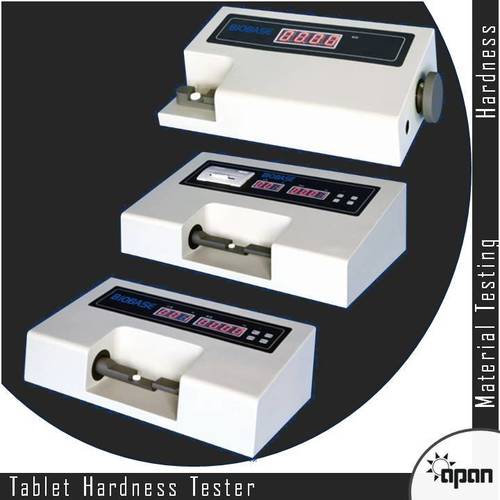
Tablet Hardness Tester

Tablet Hardness Tester

Humidity : 85% RH

Usage : Pharmaceutical laboratories

Specimen Size : Diameter 220 mm

Number of Specimens : 1 tablet at a time

Application : Measuring tablet crushing strength

Test Range : 240 kg

Portable Hardness Tester

Portable Hardness Tester

Humidity : 90% RH

Usage : Metal hardness testing

Specimen Size : 5 mm thickness

Number of Specimens : 1 at a time

Application : Onsite metal hardness testing

Test Range : 170960 HL


Back to top