
Call:
 Send Inquiry
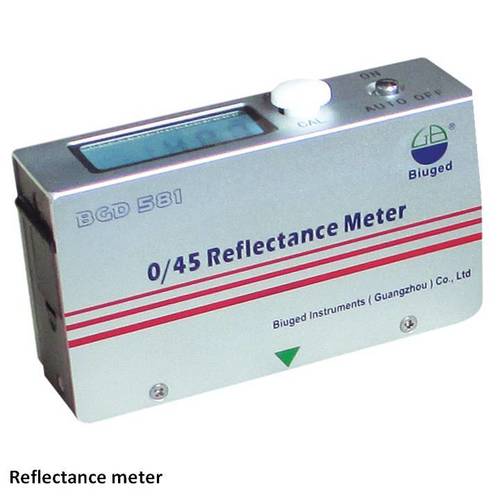
As a Authorized dealer we are engaged in providing the broad assortment of wide gamut of optical instruments.Reflectance meter is designed and manufactured according to international standard ISO2814, ISO 3906 , ISO 6504,BS 3900 and DIN 55984.
Feature
Main Technical Parameters
The terms "contrast ratio", "opacity" and "hiding power" are used interchangeably throughout the coatings industry but on this page, in order to simplify matters, only the term opacity will be used. Opacity is defined as the ability of a coating to prevent the transmission of light. A practical example of this is the case where a yellow wall is painted using a red paint. The greater the opacity the red paint, the more efficient it will be at hiding the underlying yellow colour
Opacity is defined by how a wet film of the test coating is applied to a black and white patterned substrate. After the film has dried, a reflectance meter or a spectrophotometer is used to measure the amount of light reflected from the overcoated black areas of the substrate. This is then expressed as a percentage of the amount of light reflected from the overcoated white areas. This value is the opacity of the film.
A paint which is highly opaque will obscure the black and white areas to an equal extent. In this situation, equal amounts of light will be reflected from the overcoated black and white areas and consequently an opacity value of 100% will be obtained.

Price:
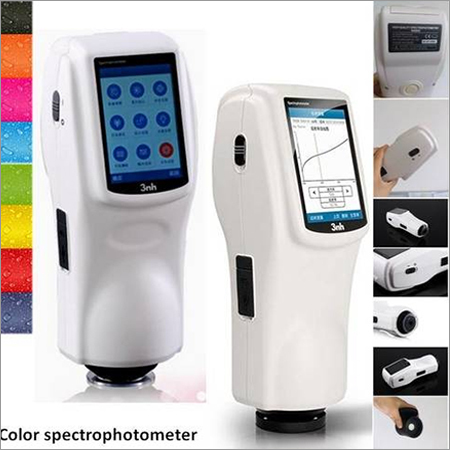
Response Time : <1 second
Automation Grade : Semiautomatic
Usage : Industrial, Laboratory, Quality control
Features : Portable, High accuracy, Multiple color space data output, Data storage, Calibration function
Interface Type : USB, Bluetooth (optional)
Application : Color measurement of solids, powder, textiles, paints, plastics, paper, and other materials
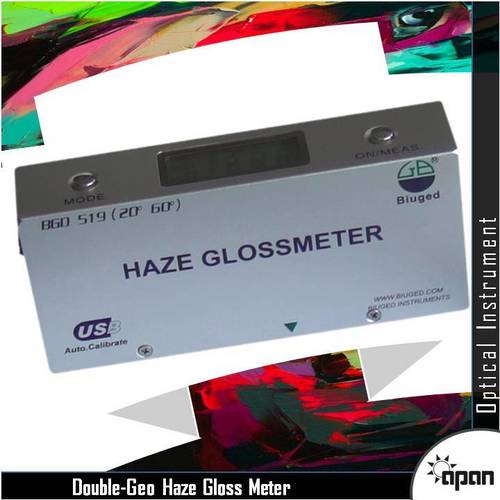
Response Time : 2 seconds
Automation Grade : Manual
Usage : Surface gloss and haze evaluation
Features : Dual Geometry (20, 60), Haze Measurement, Portable, Data Hold
Interface Type : USB
Application : Measurement of surface gloss and haze in coatings, plastics, and glass
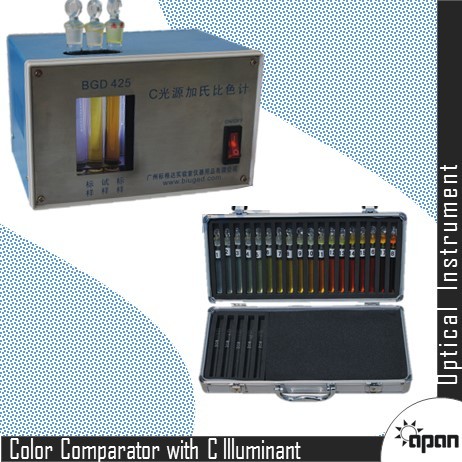
Response Time : Instantaneous visual
Automation Grade : Manual
Usage : Color comparison in chemical and quality control labs
Features : C Illuminant lamp, multiple standard disc slots, robust design
Interface Type : Manual
Application : Visual color comparison/analysis in labs, water/wastewater testing
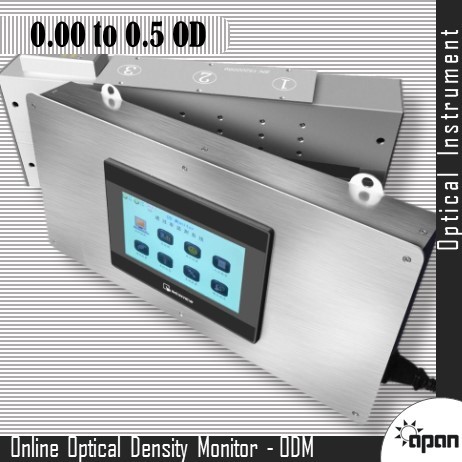
Response Time : Less than 2 Seconds
Automation Grade : Automatic
Usage : Industrial/Laboratory
Features : Realtime monitoring, AutoCalibration, Inline Installation, Low Maintenance
Interface Type : RS232/Analog Output
Application : Continuous monitoring of cell growth, fermentation and microbial processes
GST : 24AKYPB1970A1ZE


 Send Inquiry

 Send Inquiry


