Soil Testing Kit - Secondary About
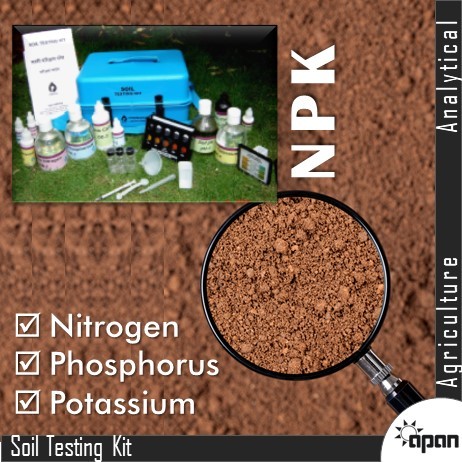
The Kit contains everything needed to perform the tests on-site, well packed in a compact box for convenient field use. It comes with an Instructions manual containing easy step-by-step testing procedures which enable even a layman to carry out all tests.
This Kit can be used to rapidly test soil for following 3 parameters at site itself:
Solit Test Kit attempts to provide a fairly accurate idea about the nutrient level in the soil. The users get an idea as to whether the nutrient rating is very low, low, medium, high or very high. Thus, further corrective action can be carried out as required. The Kit does not claim to provide exact figures of the nutrient content, which is possible only in a well-equipped laboratory, using elaborate testing procedures, expensive hi-tech instruments, specially trained skilled chemists and above all, generous devotion of time..!
Specifications :
- Calcium : Range : 0 10 Meq %, Least Count: 0.5 Meq %
- Magnesium : Range : 0 10 Meq %, Least Count: 0.5 Meq %
No. of soil samples tested by the Kit: 50 (Refill Kits available for subsequent use)
Accurate Field Analysis for Secondary NutrientsDesigned for rapid, semi-quantitative detection of Calcium, Magnesium, and Sulphur, this portable kit helps maximize crop health and soil management in diverse agricultural and research settings. With no need for power and easy manual operation, it adapts perfectly for both fieldwork and laboratory experiments.
All-Inclusive, User-Friendly Kit ContentsEverything needed for testing is included: chemical reagents, durable test tubes, droppers, a clear color chart for visual reading, and an instructional manual. Its sturdy carrying case and lightweight (2.7 kg) build make transport and storage effortless, even in remote areas.
Simple, Reliable Colorimetric ProcessManual sample preparation and color chart comparison provide results in just 510 minutes per test. The kit supports multiple soil types (sandy, loamy, silt, clay), with user-dependent throughput and discreet measurement ranges for each analyzed nutrient.
FAQs of Soil Testing Kit - Secondary:
Q: How do I use the Soil Testing Kit Secondary for soil analysis?
A: To use the kit, collect a soil sample (13 g), add the soil to a test tube, and mix with the designated reagent using the provided droppers. Shake or swirl as instructed, then compare the resulting color to the provided chart to estimate nutrient concentrations. Detailed steps are outlined in the included manual.
Q: What parameters does the kit measure, and what is the detection method?
A: The kit is designed to test for secondary soil nutrientsCalcium (Ca), Magnesium (Mg), and Sulphur (S)using a colorimetric chemical reaction. Visual comparison against the supplied color chart provides semi-quantitative results for each nutrient.
Q: When should I use this kit for soil testing?
A: Ideal times to use the kit include before planting, after harvest, or during crop growth to assess and manage soil nutrient levels. Regular testing helps monitor soil health and inform fertilization or amendment decisions.
Q: Where can I use the Soil Testing Kit Secondary?
A: This kit is field-portable and suitable for laboratory use, making it perfect for on-site agricultural fields, horticultural plots, academic research stations, or extension programs. It works with sandy, loamy, clay, and silt soils.
Q: What is the process for refilling the reagents, and are refills available?
A: Reagent refills are available separately from the distributor or supplier. Simply replace the used reagent bottles with new ones as described in the kit manual, ensuring uninterrupted use for multiple soil analyses.
Q: How should the kit and its components be stored for optimal shelf life?
A: Store the kit in a cool, dry place, away from direct sunlight. Maintaining temperature between 10C to 40C and humidity at 1090% RH extends reagent shelf life (1224 months) and preserves kit integrity.
Q: What are the main benefits of using this soil testing kit?
A: Key advantages include its portability, ease of use, ability to test multiple soil types, no need for electrical power, rapid results within minutes, and the suitability for both field and lab applications. This versatility supports better soil and crop nutrient management.

 Send Inquiry



 Send Inquiry

 Send Inquiry


