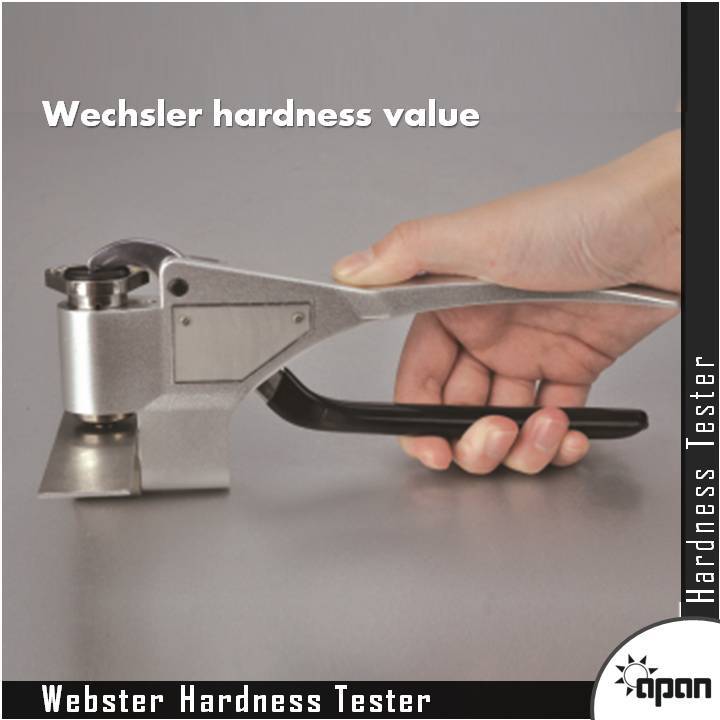
Webster Hardness Tester

Webster Hardness Tester

Webster Hardness Tester Specification

  • Specimen Size
  • Up to 13 mm thickness, standard jaw length
  • Test Range
  • Material dependent; typical: 25-110 HRE (Webster Hardness)
  • Mounting Type
  • Handheld
  • Display Type
  • Analog dial
  • Number of Specimens
  • Single point measurement
  • Port Size
  • Standard jaw width
  • Features
  • Portable, Direct Reading, No Power Needed
  • Application
  • On-site rapid hardness testing of aluminum alloys, copper, brass etc.
  • Accuracy
  • 1 HRE
  • Power Supply
  • Not Required (Handheld, mechanical)
  • Hardness
  • Webster Scale (HRE)
  • Automation Grade
  • Manual
  • Response Time
  • Immediate
  • Equipment Type
  • Portable Handheld Hardness Tester
  • Humidity
  • 85% RH
  • Max Height
  • Suitable for profiles up to 13 mm thickness
  • Temperature
  • 0~40C
  • Measuring Range
  • 25-110 HRE (Webster)
  • Resolution
  • 1 HRE
  • Usage
  • Industrial, QA/QC, Laboratory
  • Capacity
  • Applicable for aluminum profiles, pipes, plates
  • Machine Weight
  • 0.5 kg
  • Test Speed
  • Manual operation, instantaneous reading
  • Test Width
  • Maximum 13 mm (sample edge distance)
  • Test Stroke
  • 2 mm
  • Control Mode
  • Manual
  • Reading Mode
  • Direct analog scale
  • Suitable Specimen Type
  • Flat and tubular samples
  • Case Included
  • Carrying box provided
  • Service
  • After-sales maintenance support available
  • Standard Conformity
  • GB/T231.2, ASTM B647
  • Maintenance
  • Simple, minimal calibration necessary
  • Body Material
  • Aluminum alloy
  • Jaw Opening
  • Approximately 13 mm
  • Indenter Material
  • Hardened Steel
  • Calibration Method
  • Standard test block supplied
 

Webster Hardness Tester Trade Information

  • Main Export Market(s)
  • Asia
 

About Webster Hardness Tester

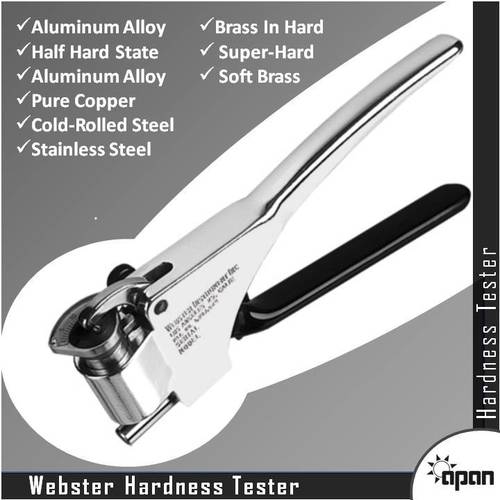
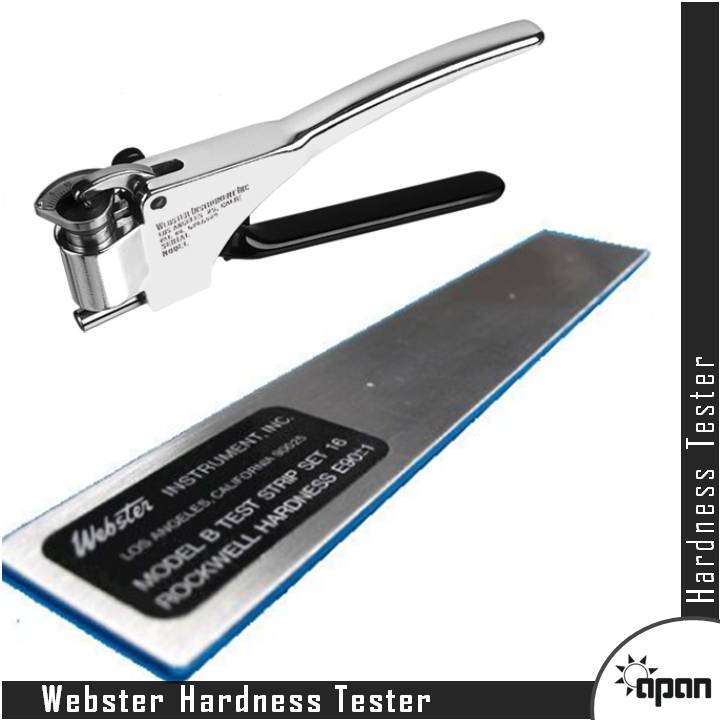
Webster Hardness Tester is Portable, fast, accurate hardness gage available in several models for testing materials such as aluminum, brass, copper and mild steel. Quickly identify tempers. Tests a variety of shapes that other testers cannot check: Extrusions, Tubing and Flat Stock.

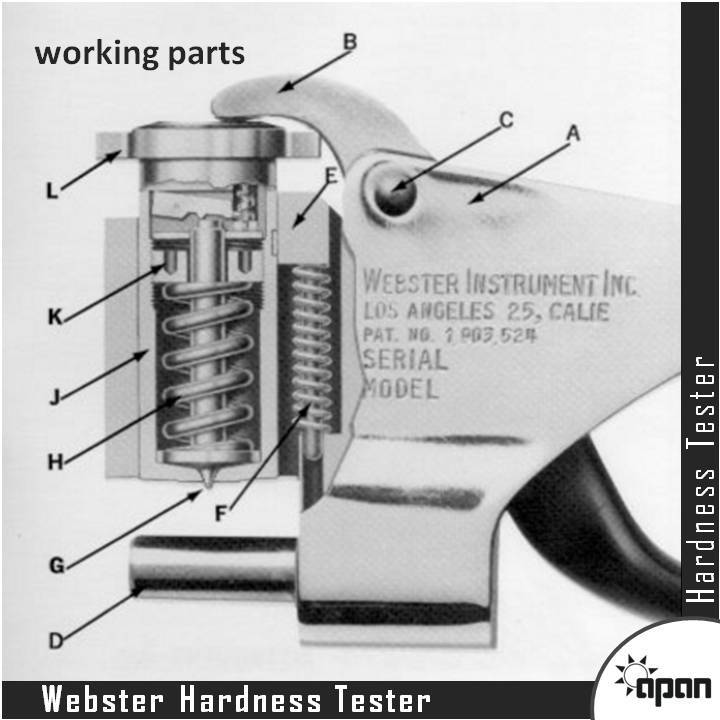
All testers operate in the same manner but differ only in penetrator design, type of load spring and hardness ranges. The principle of operation is simple. The work to be tested is placed between the anvil and the penetrator. Pressure is then put to the handles until "bottom" is felt at which time the dial indicator is read. 

Applications for Webster Hardness Testers are:

  • Identifies heat-treated from nonheat-treated parts.
  • Provides correlation between a bench mounted hardness tester and the production line.
  • Segregates materials in stock.
  • Differentiates between soft or work-hardened material.
  • Identifies parts made from improper or substandard alloys.
  • Checks for proper heat-treatment response.
  • Useful in conjunction with stationary laboratory hardness testers. Gives a rapid 100% check on parts which would consume many man hours with slower operating test equipment.
  • Can be used on assemblies that cannot be brought to the labs.

Webster Hardness Testers Feature:

  • One hand operation and portability.
  • Round 3/8 inch diameter anvil permits testing a great variety of shapes.
  • Simple operation permits readings independent of the operator's skill.
  • Test is made by simply putting pressure to the handles until "bottom" is felt.
  • Easy-to-read dial indicator with 20 graduations permits use of the tester as "go" and "no-go" gauge.
  • Standard hardness gauge tests materials up to 1/4 inch in thickness.
  • Increased capacities available up to 1 inch.

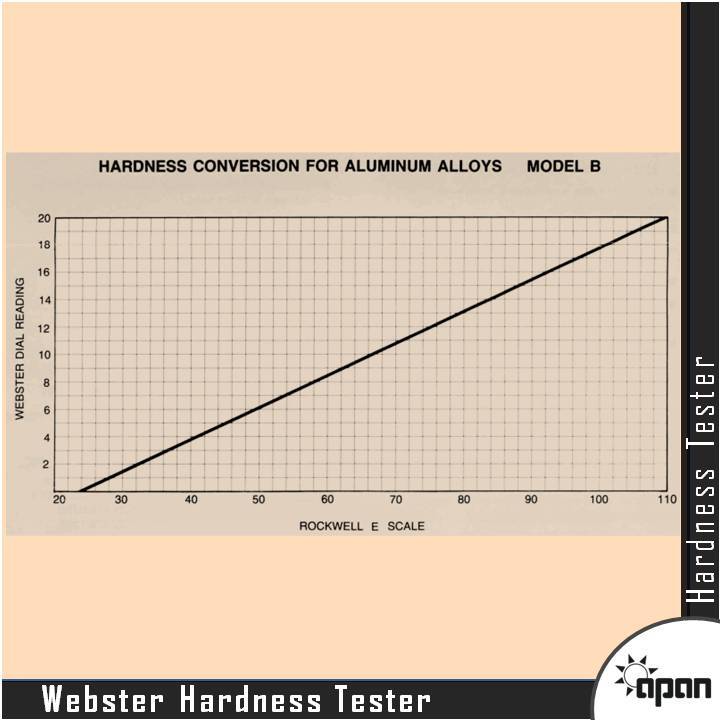
The Model B Tester is designed to cover the hardness of aluminum alloys from the 1100 to the 7075 series. The 20 graduations on the Webster dial indicator covers the range between 25 and 110 on the Rockwell E Scale.

The Model B-75 Tester was developed to obtain more sensitive response to slight changes in the upper range of hardness covered by the Model B. This sensitivity is particularly useful in testing mild steel and the stronger aluminum alloys. For brass the B-75 covers the range from annealed to full-hard. This added sensitivity is accomplished by incorporating a penetrator of slightly different contour and a heavier load spring than used in the Model B. The 20 graduations on the Webster dial indicator covers the range between 20 and 100 on

the Rockwell B Scale. The Model BB-75 Tester was developed to answer the need of certain industries for a method of rapidly testing the hardness of electro-deposited copper and copper in the low hardness range. The B-75 penetrator is used to give sensitivity and the Model B load spring is employed to give light pressures. This combination allows the user to test the soft range of many common materials.

Specification 

Testing Range

Specimen Size/mm

Application

25-110 HRE

58-131 HV

Thickness 0.4-6

Inner diameter>10

Aluminum alloy

Thickness 0.4-13

Inner diameter>10

Thickness 0.4-8

Inner diameter>6

63-105 HRF

Thickness 0.4-6

Inner diameter>10

Brass in hard or half hard state
super-hard aluminum alloy


Thickness 0.4-8

Inner diameter>6

18-100 HRE

Thickness 0.4-6

Inner diameter>10

Soft brass
pure copper


Thickness 0.4-8

Inner diameter>6

50-92 HRB

Thickness 0.4-6

Inner diameter>10

Cold-rolled steel sheet
stainless steel


Portable and Efficient Hardness Testing

The Webster Hardness Tester is specifically engineered for on-the-spot measurement of material hardness, enabling instant evaluation without the need for laboratory facilities or external power. With manual operation and direct analog scale reading, obtaining and interpreting test results is remarkably quick and straightforward. The portable design and included carrying box offer practical mobility for use in various industrial and field environments.


Versatile Application for Metals

Compatible with a range of metalsincluding aluminum, copper, and brassthe tester accommodates both flat and tubular specimens up to 13 mm thick. Its adaptability ensures reliable performance for profiles, pipes, and plates, making it ideal for distributors, exporters, and industrial labs requiring rapid, single-point hardness measurement in compliance with global standards like GB/T231.2 and ASTM B647.

FAQs of Webster Hardness Tester:


Q: How is the Webster Hardness Tester calibrated before use?

A: The tester is calibrated using a standard test block supplied with the instrument. This ensures consistent accuracy across all measurements and meets the requirements of GB/T231.2 and ASTM B647 standards.

Q: What types of specimens can be tested with this device?

A: The Webster Hardness Tester is suitable for flat and tubular samples, such as aluminum profiles, pipes, and plates, with a maximum thickness of 13 mm and a test stroke of 2 mm.

Q: When should I use this tester instead of laboratory methods?

A: Use this tester for on-site rapid assessments when immediate results are neededespecially during production, inspection, or quality controlwithout the need for laboratory equipment or electricity.

Q: Where can this device be practically used?

A: This handheld tester is ideal for use on the factory floor, in the warehouse, during field inspections, or any setting where quick, reliable hardness readings of metal samples are essential.

Q: What is the process to perform a hardness test with this instrument?

A: Simply position the specimen in the jaws, manually operate the lever to engage the hardened steel indenter, and read the value directly from the analog scale. The response is immediate, enabling high-efficiency testing.

Q: How does this tester benefit quality assurance processes?

A: Its portability and instant, direct readings allow for rapid screening of materials, enabling quick quality checks and minimizing downtime in production or inspection environments.

Q: Is ongoing maintenance complicated for this equipment?

A: Maintenance is straightforward and minimal. Aside from occasional calibration checks using the provided test block, the tester generally requires little upkeep, and after-sales service is available if needed.

Tell us about your requirement
product

Price:

Quantity
Select Unit

  • 50
  • 100
  • 200
  • 250
  • 500
  • 1000+
Additional detail
Mobile number

Email

More Products in Material Testing Category

Automatic Digital Rockwell Hardness Tester

Automatic Digital Rockwell Hardness Tester

Response Time : Instantaneous upon test

Equipment Type : Automatic Digital Rockwell Hardness Tester

Hardness : Rockwell (HRA, HRB, HRC)

Automation Grade : Automatic

Max Height : 180 mm

Temperature : 10C ~ 35C

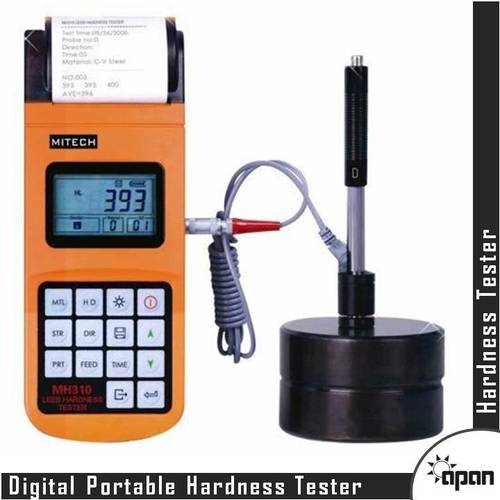
Portable Hardness Tester ASTM A956

Portable Hardness Tester ASTM A956

Response Time : <1 second

Equipment Type : Portable Hardness Tester

Hardness : Supports HL, HB, HRB, HRC, HV, HS scales

Automation Grade : SemiAutomatic

Max Height : Test on objects with unlimited height (surface access required)

Temperature : 0C to 40C operating

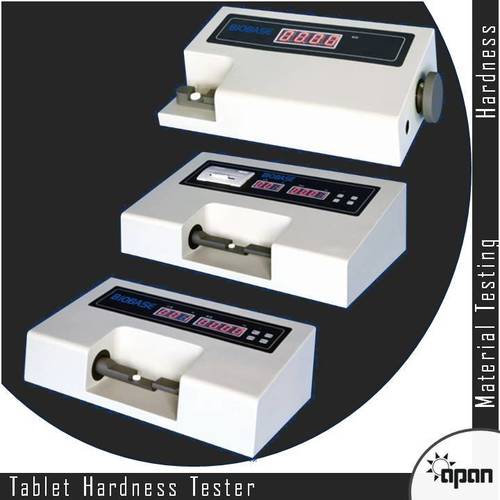
Tablet Hardness Tester

Tablet Hardness Tester

Response Time : <2 seconds

Equipment Type : Tablet Hardness Tester

Hardness : 240 kg

Automation Grade : Manual

Max Height : 150 mm

Temperature : 10C35C

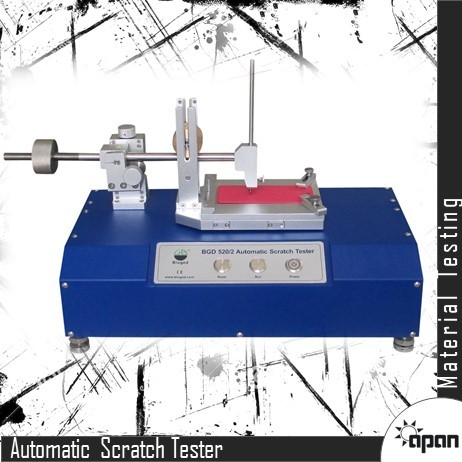
Automatic Scratch Tester

Automatic Scratch Tester

Response Time : <1 sec

Equipment Type : Automatic Scratch Tester

Hardness : Supports pencil & diamond stylus

Automation Grade : Automatic

Max Height : 60 mm (Specimen thickness)

Temperature : 1535C


Back to top