
Call:
 Send Inquiry
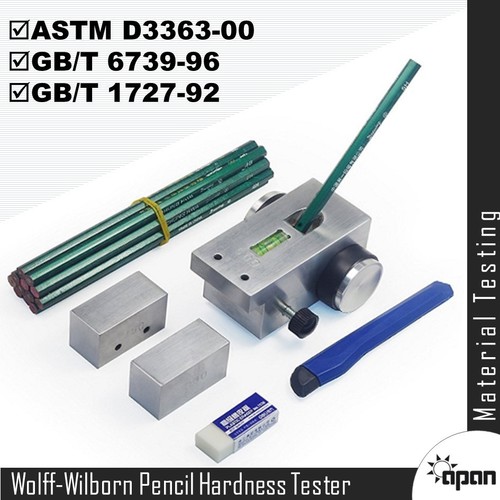
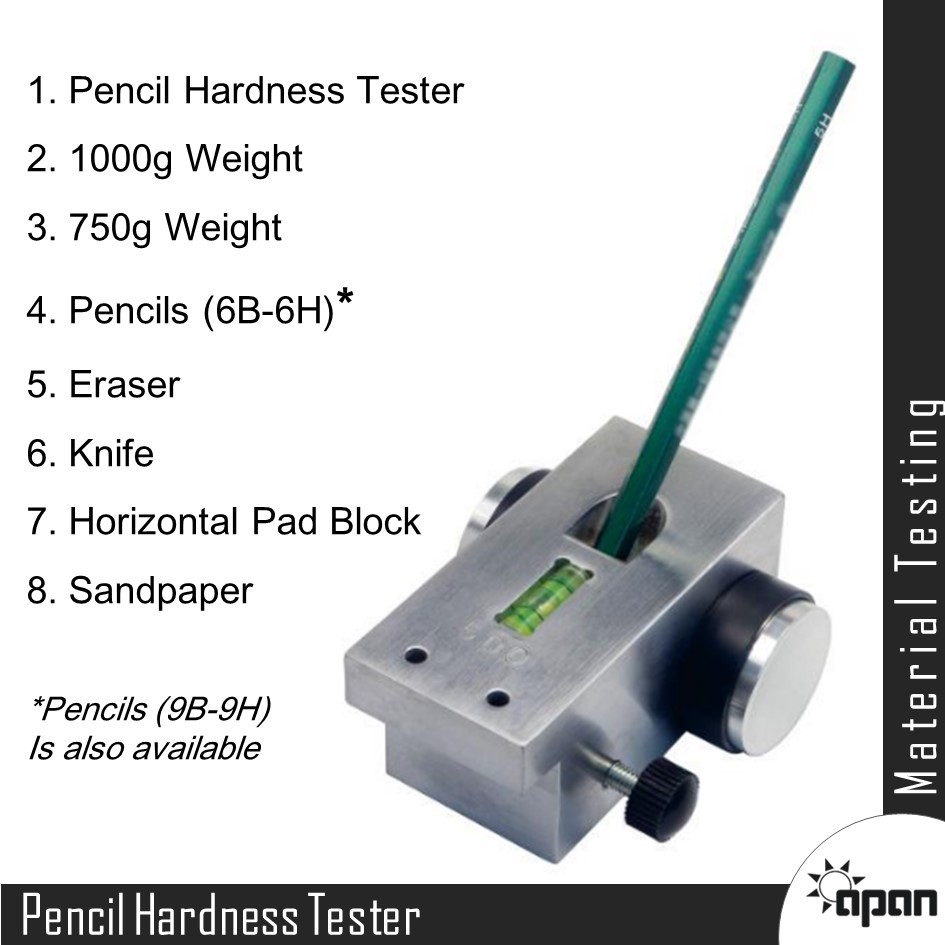
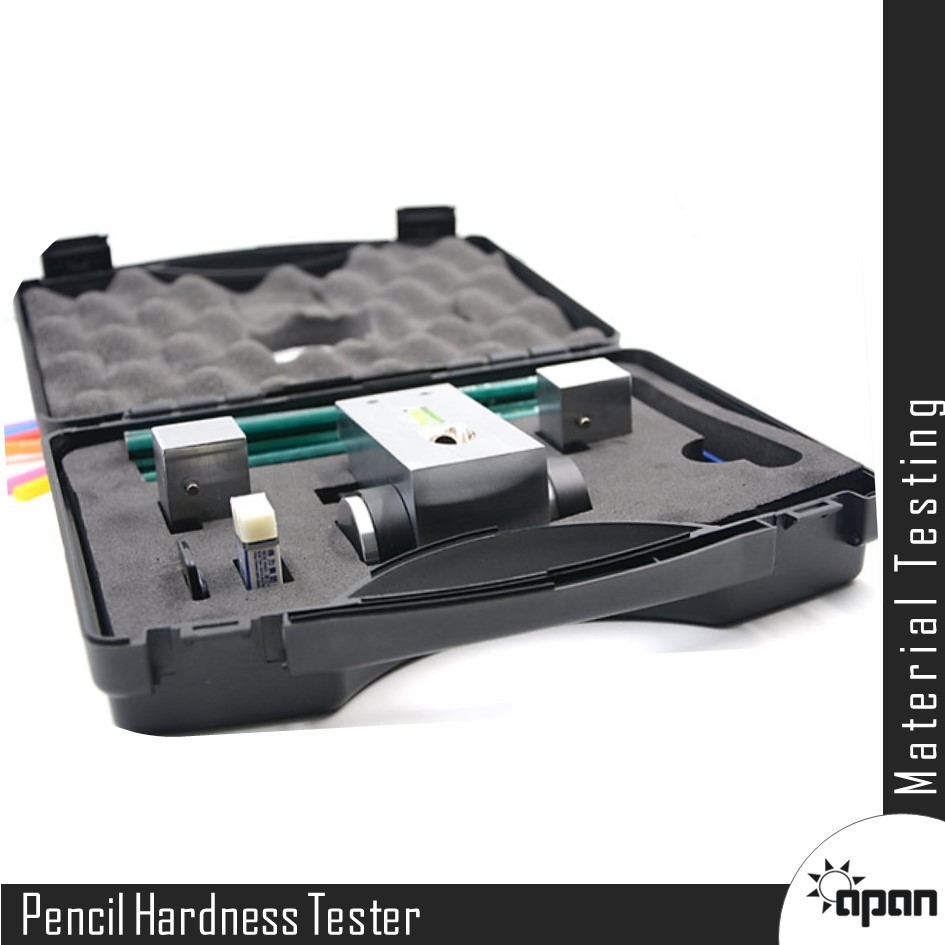
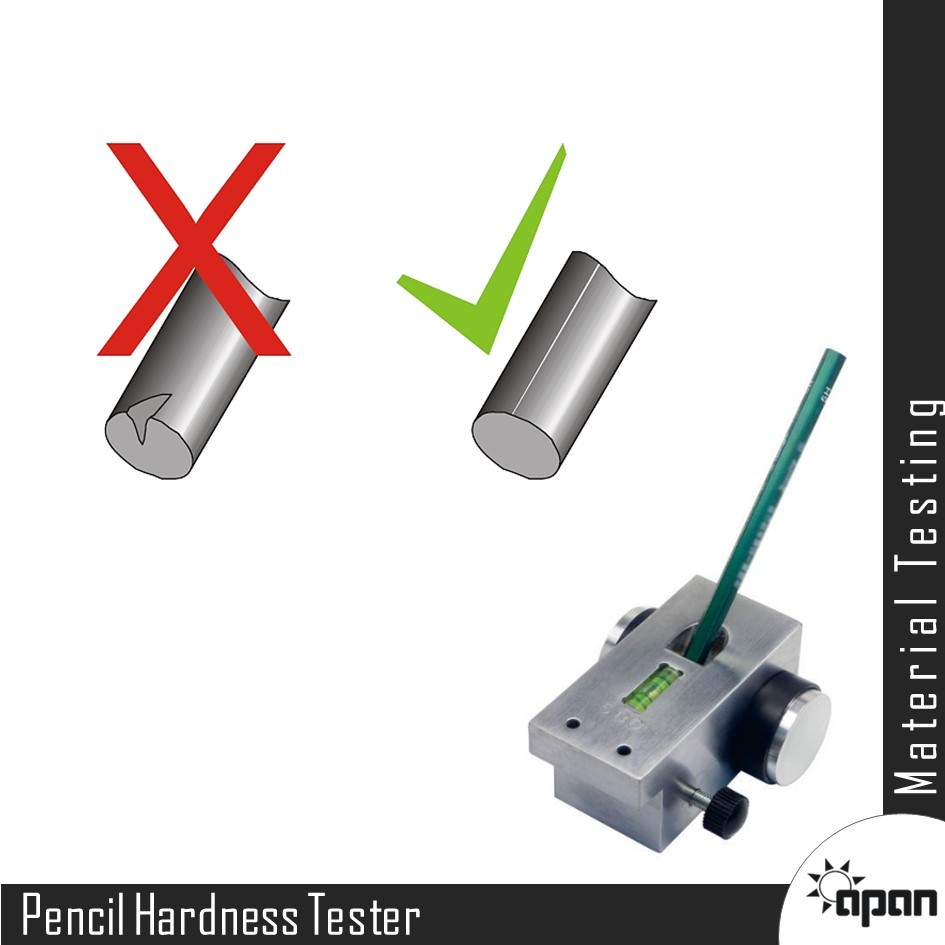
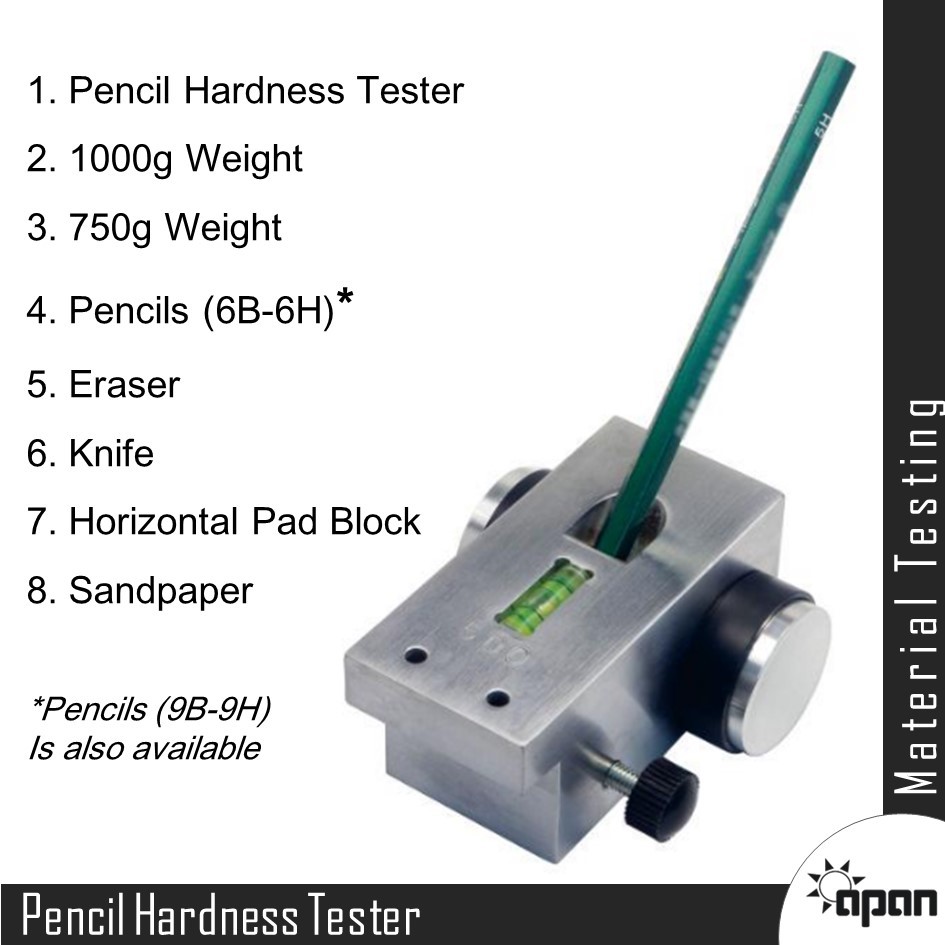
What is Pencil Hardness ?
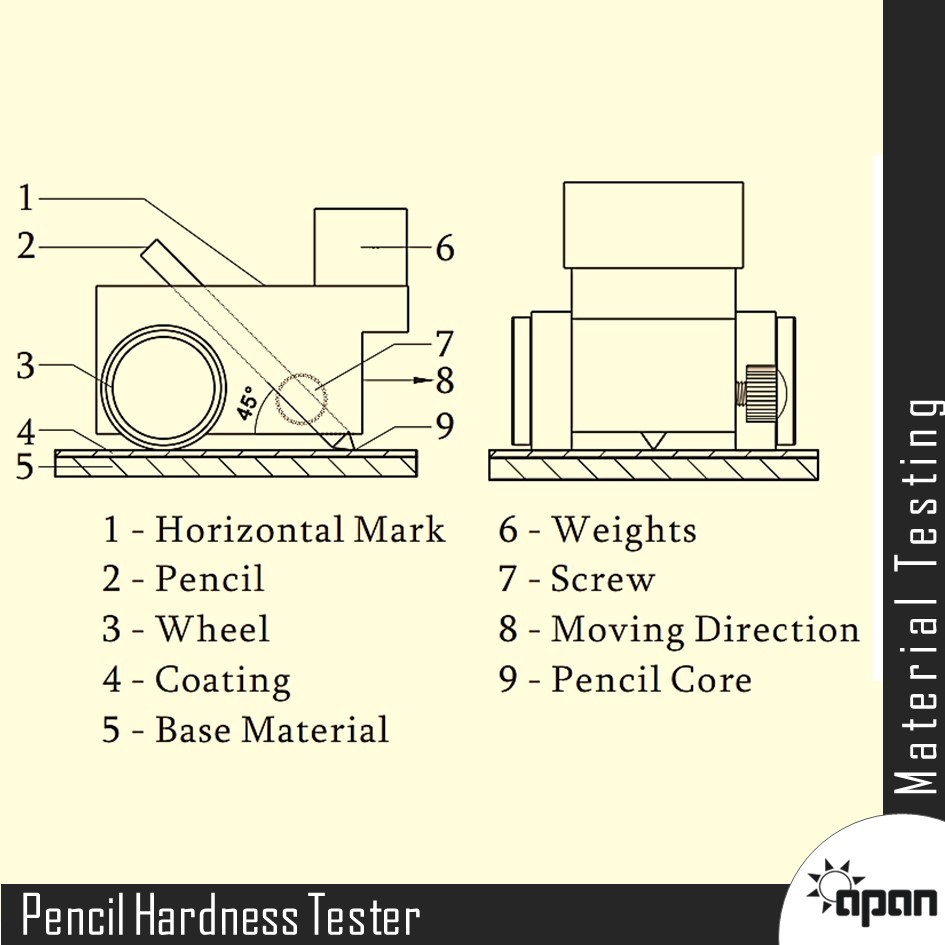
Hardness, in the coated film industry, is the capacity of a given coated surface to resist scratching, marring or gouging. When expressing the measurement of pencil hardness, we do so with a value scale that ranges from 6B, softest, to 9H, hardest (See image 1-1 for the full scale). Typically, films such as polyester and polycarbonate fall in the ranges of B to 4H depending on if the film is uncoated or coated, and if it is coated, what properties the coating offers. The value is recorded as the hardest pencil that does not scratch or mar the surface of the coating.
How do you Measure Pencil Hardness?
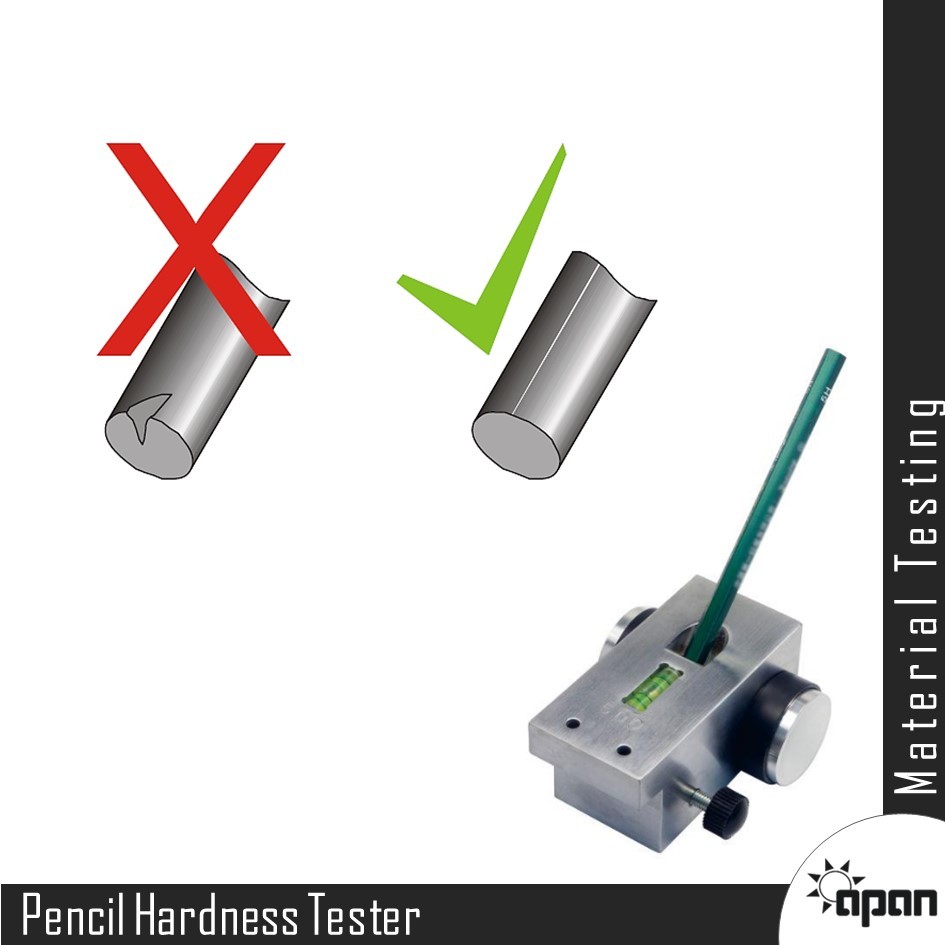
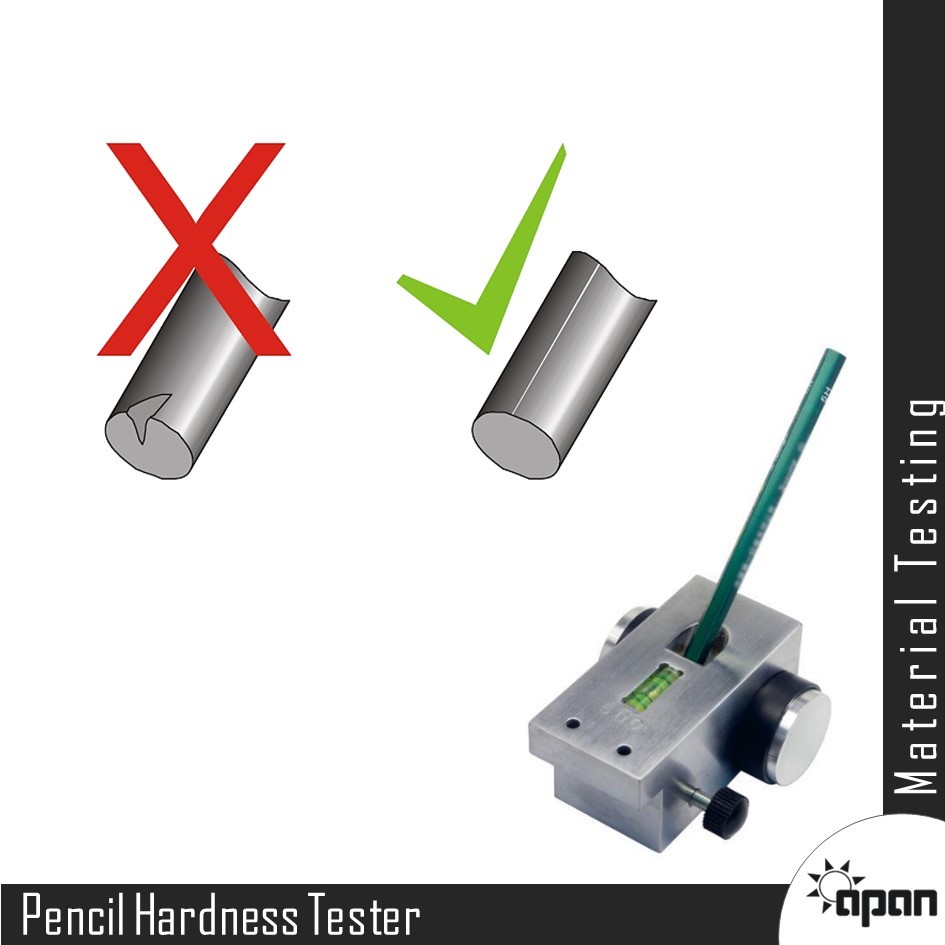
Standardized Procedure.
What is the purpose of pencil hardness test?
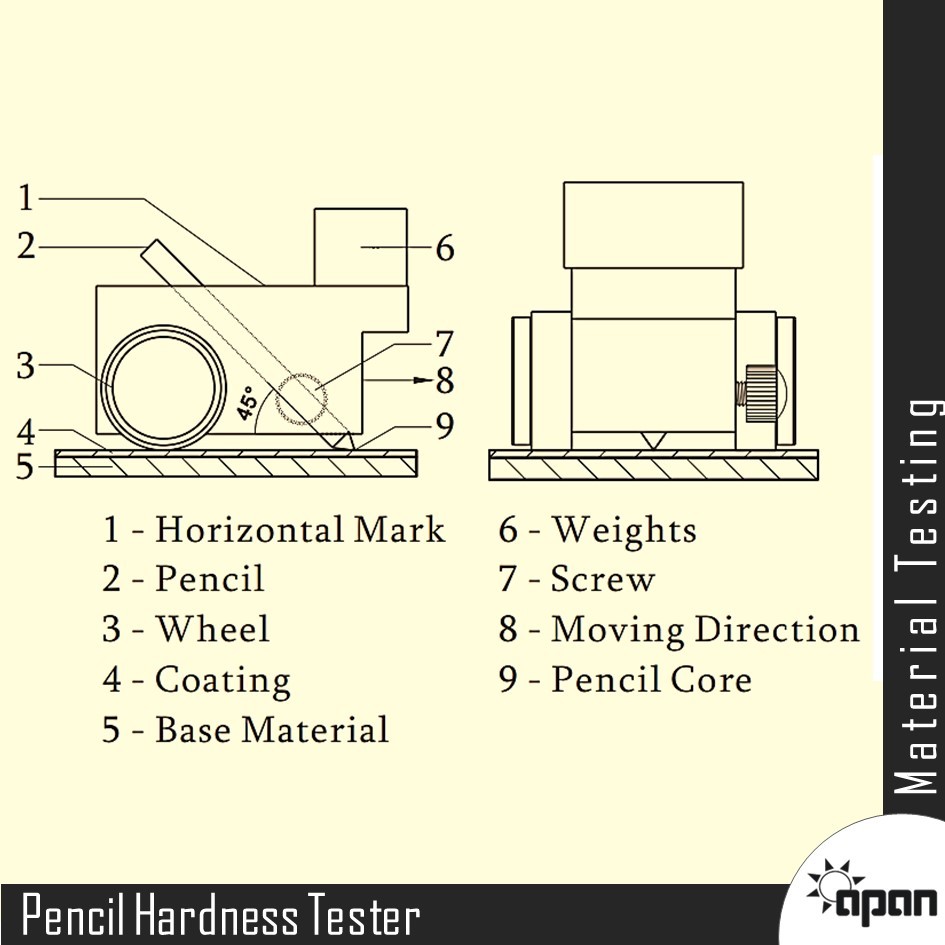
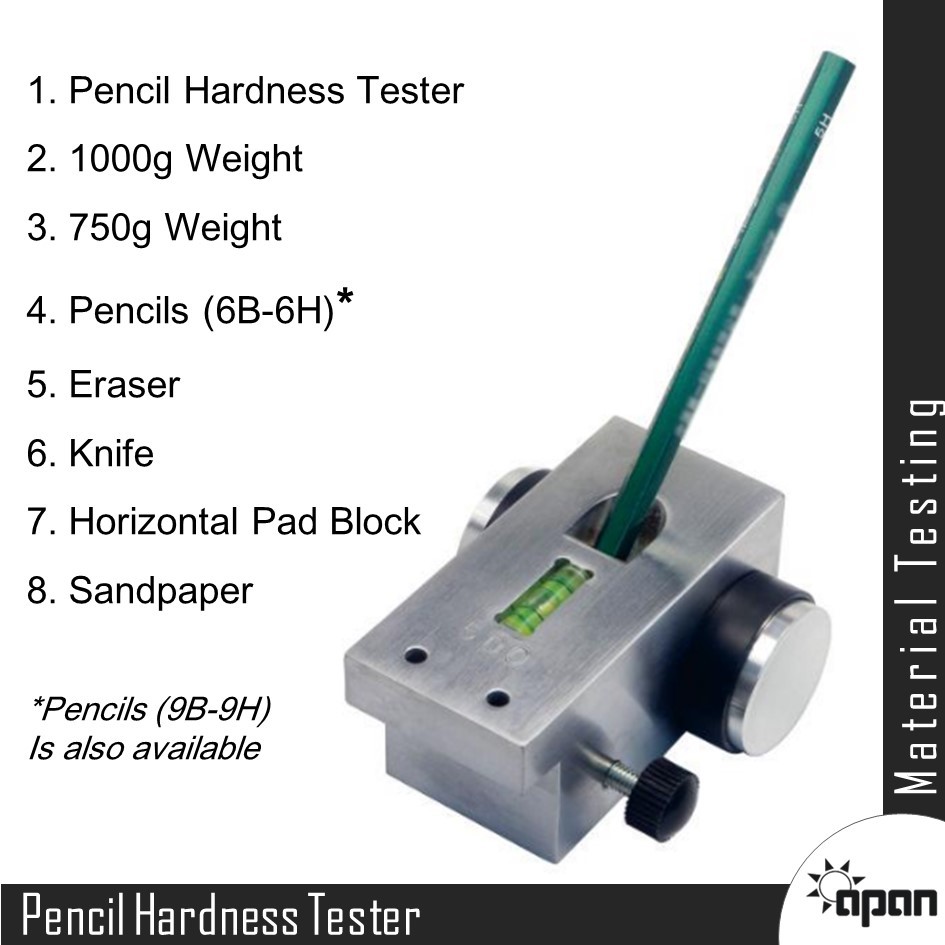
A pencil hardness test is a kind of assessment technique that is performed to decide the hardness of a material, ordinarily covering materials. To play out a pencil hardness test, graphite pencils of differing hardness are gotten across a coverings surface.
What precautions should be taken when performing a hardness test?
Accurate hardness values may not be obtained if foreign matter such as dust, rust, or oil is included on contact surfaces.

Price:
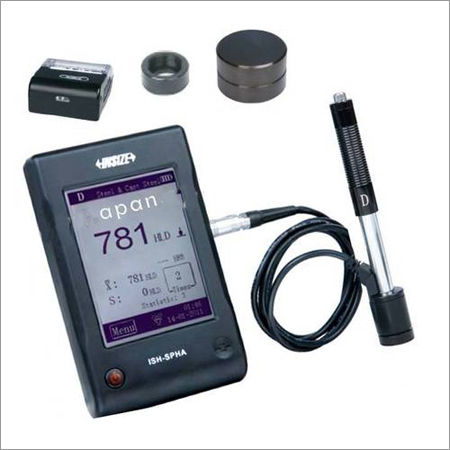
Mounting Type : Handheld / Portable
Application : Metallic material hardness measurement
Measuring Range : 170960 HL (Leeb)
Features : Portable, digital, memory storage, auto poweroff, calibration
Automation Grade : SemiAutomatic
Temperature : 0C to 40C operating
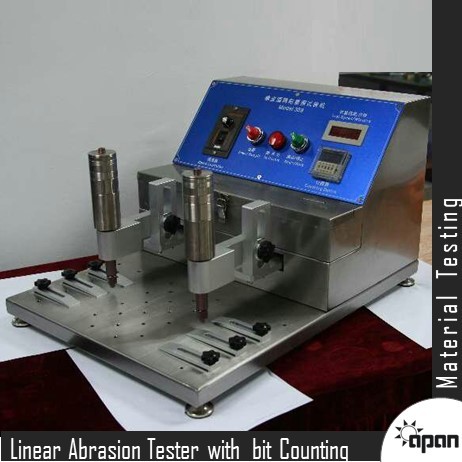
Mounting Type : Benchtop
Application : Assessment of abrasion resistance for coated, painted, and printed surfaces
Measuring Range : 0999,999 cycles
Features : Adjustable test speed, programmable cycles, easy specimen mounting, easytoclean design
Automation Grade : Semiautomatic
Temperature : Room temperature (5C ~ 35C)
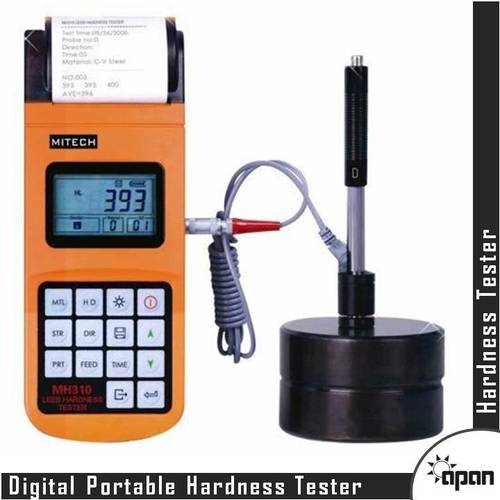
Mounting Type : Handheld/Portable
Application : Metal hardness measurement (steel, cast steel, alloy, copper, etc.)
Measuring Range : 170960 HL (Leeb); equivalent to HRC, HRB, HB, HV, HS
Features : Builtin printer, memory backup, multiple conversion scales
Automation Grade : Semiautomatic
Temperature : 0C to 40C (operating)
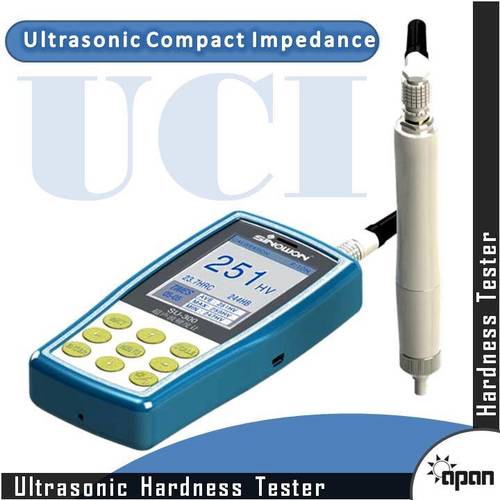
Mounting Type : Handheld
Application : Metals Hardness Measurement
Measuring Range : HV 201740, HRC 20.468.0, HB 20527, HS 32.599.5, HL 170960
Features : Data Storage, USB Export, Portable Design
Automation Grade : Manual
Temperature : 0C to 40C
GST : 24AKYPB1970A1ZE


 Send Inquiry

 Send Inquiry


