About Pin Brinell Hardness Tester
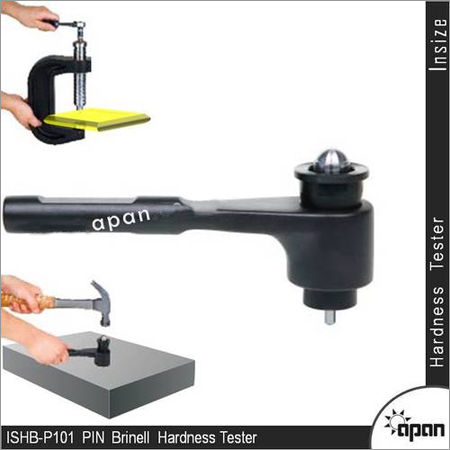
Clients can avail this Pin Brinell Hardness Tester from us at highly competitive price. This is a unique portable instruments, integrated with a precision shear pin for ensuring correct manual loading against the sample. The Pin Brinell Hardness Tester is available for clients in a wide range of specifications and models in order to cater their diverse requirements.
Features:
- Can resist high impact
- Weather proof
- Durable quality
- At nominal price
Superior Durability and ConstructionCrafted from solid cast iron and finished with a powder-coated layer, the tester is built for longevity and reliable performance, even in demanding environments. Its robust design resists rust and minimizes maintenance, translating to uninterrupted operation and consistent results across various industrial applications.
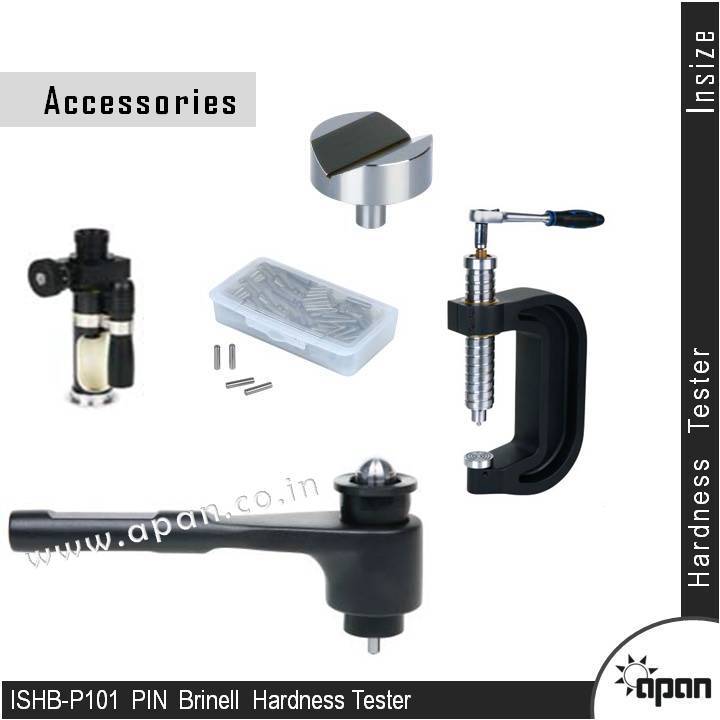
Accurate and Efficient Hardness TestingThe device utilizes a hardened steel ball indenter and a fully compliant Brinell test method, ensuring reliable measurements every time. The included 20X microscope provides clear visualization of indentations, while manual controls enable direct and straightforward operation. Calibration is easy, ensuring ongoing accuracy for every test.
Versatile Applications and Wide Test RangeDesigned to accommodate single pins and small components, this tester is suited for use in metallurgy, automotive, and manufacturing sectors. Adjustable dwell times, a broad test range (32650 HB), and compatibility with a variety of sample sizes enable comprehensive material assessment for quality control and research purposes.
FAQs of Pin Brinell Hardness Tester:
Q: How does the Pin Brinell Hardness Tester operate?
A: The tester employs the Brinell indentation method, where a hardened steel ball indenter creates an impression on the specimen under a defined force. The size of the indentation is then measured using the fitted 20X optical microscope, and the hardness value is determined accordingly.
Q: What components are included with the machine upon purchase?
A: Each unit is supplied with a set of Brinell balls and a 20X microscope for optical reading, ensuring you are fully equipped for immediate hardness testing.
Q: Where can this tester be used effectively?
A: This tester is ideal for laboratories, quality control departments, and production environments in industries such as metallurgy, automotive, and manufacturing, especially for analyzing pins and small components.
Q: What is the process for conducting a hardness test?
A: To test, place the specimen, set the dwell time (1015 seconds), manually apply the load (up to 3000 kgf), and create an indentation. Then, use the microscope to read the mark and reference the analog gauge for the final hardness value.
Q: What are the benefits of using this Brinell Hardness Tester?
A: This tester provides accurate and repeatable results, is easy to calibrate, and features robust, rustproof construction. Its portability and manual control make it versatile for a wide range of applications and user-friendly for operators.
Q: What is the accuracy and resolution of this device?
A: The tester offers an accuracy of 1% and a resolution of 0.1 HB, ensuring precise measurements for quality assurance and research requirements.

 Send Inquiry



 Send Inquiry

 Send Inquiry


