Automatic Digital Rockwell Hardness Tester About
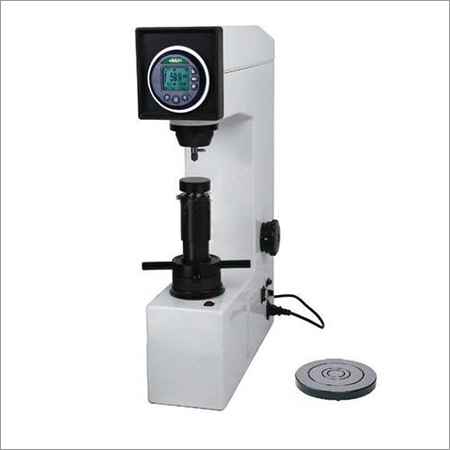
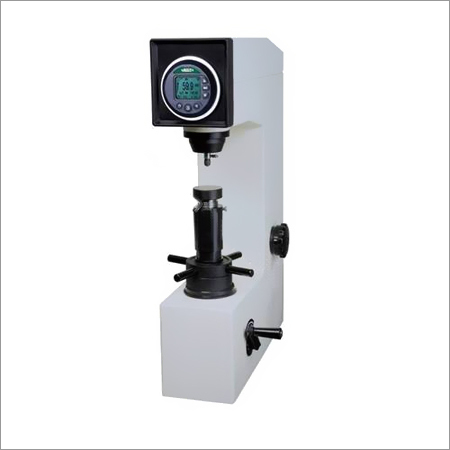
We are counted among the topmost suppliers of a wide range of Automatic Digital Rockwell Hardness Tester. In accordance with industry standards, this is manufactured using high grade materials. Our highly skilled team procures the entire stock from genuine vendor in market. We are offering this equipment to clients in different specifications at economical prices. Automatic Digital Rockwell Hardness Tester is specifically designed for measuring the hardness of different kinds of metals and alloys.
Features:
- High level of accuracy in result
- User friendly design
- Fully automatic operation
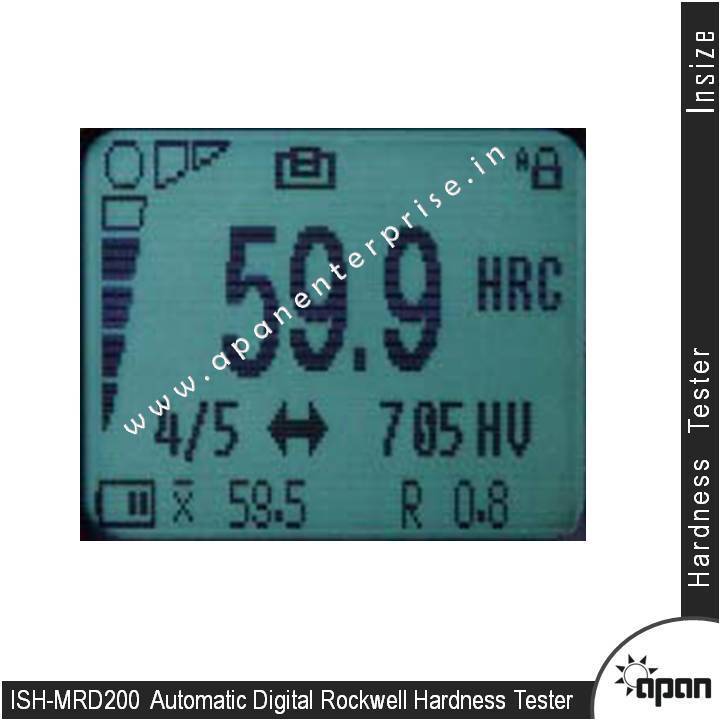
Advanced Display and Data ManagementThe digital LCD provides real-time feedback on the testing process, displays critical information like error codes, and supports statistical memory for multiple test data. Integrated memory storage ensures important test results are securely retained, and RS232 output allows for seamless data export to external devices for further analysis and documentation.
Versatile and Efficient TestingCapable of handling a large range of specimen sizes (270 mm in height) and test types, the tester operates with automatic or manual scale selection across HRA, HRB, and HRC ranges. The automatic motorized indenter and rapid test cycle (up to 60 tests/hour) enhance throughput and reduce user intervention, making it ideal for high-volume testing environments.
Reliability and Precision GuaranteedWith an accuracy of 1 HR and repeatability of 1 HR, the tester ensures highly reliable results. Its robust build, LED indicators, and stringent environmental adaptability (up to 85% RH, 1035C) maintain performance in demanding laboratory and industrial settings. Multi-language support broadens accessibility and usability for diverse operator expertise.
FAQs of Automatic Digital Rockwell Hardness Tester:
Q: How does the Automatic Digital Rockwell Hardness Tester ensure measurement accuracy and repeatability?
A: The tester is designed with precision penetrators (diamond cone and steel ball) and a motorized automatic indenter to maintain consistent test forces and conditions. It provides an accuracy of 1 HR and repeatability of 1 HR, minimizing user-dependent variability and ensuring reliable, reproducible results across multiple tests.
Q: What types of test scales and penetrators does this instrument support?
A: This model supports Rockwell HRA, HRB, and HRC scales with automatic or manual selection. The available penetrator types include a diamond cone for harder materials and a steel ball for softer metals and alloys, enhancing versatility in hardness determination for various material types.
Q: When can I use the memory storage and data output functions?
A: Memory storage is automatically engaged with every test, saving multiple consecutive results and statistical summaries. For external documentation or further analysis, you can use the RS232 output to transfer data to a printer or a PC at any time during or after testing.
Q: Where is this device most suitable for use?
A: Thanks to its bench-mounted design, robust construction, and large capacity, the tester is ideal for laboratory and industrial environments. Common applications include quality control, research and development, and production line materials verification, especially in metal and alloy industries.
Q: What is the process for operating this automatic hardness tester?
A: The operating process involves placing the specimen, selecting the appropriate scale (automatic or manual), and initiating the testing sequence. The device automatically loads the penetrator, applies the force, measures the indentation, displays the result, and archives the data, streamlining the workflow for the user.
Q: How does the multi-language support benefit diverse user teams?
A: With both English and Chinese language options available on the digital display, the tester is accessible to multilingual teams, reducing the learning curve and enhancing efficiency for operators across different regions and backgrounds.
Q: What are the main advantages of using this automatic digital Rockwell hardness tester over manual models?
A: The automatic digital model minimizes human error, increases throughput (up to 60 tests/hour), automates loading/unloading, provides instant digital results, and allows for seamless data storage and transfer. These features lead to improved workplace efficiency, accurate documentation, and greater ease of operation.

 Send Inquiry



 Send Inquiry

 Send Inquiry


